
What is the Sustainability Value Creation Framework?
Understanding the new framework for driving financial value through sustainability in private markets. Developed by PRI, Bain, and NYU STERN. Published in July 2025

Why Sustainability Matters for Business
Companies that care about the environment, treat their employees well, and operate ethically are outperforming their competitors financially. What was once seen as a nice-to-have has become a proven strategy for higher returns.
The "Sustainability Value Creation (SVC) Framework", developed through a major collaboration between PRI and Bain & Company and released in July 2025, provides a detailed blueprint for integrating environmental, social, and governance (ESG) considerations into investment strategies. This framework emerged from extensive engagement with over 400 investors who faced a critical challenge, i.e., they needed practical guidance that could quantify the actual financial impact of sustainability initiatives.
The framework's core premise is straightforward, viz., when executed strategically, responsible investment goes far beyond mere compliance. It becomes a fundamental component of wealth generation and long-term business resilience. The SVC framework shows investors how to systematically embed sustainability across their entire investment lifecycle.
Important note: The specific financial figures mentioned throughout this article, including percentage uplifts and growth rates, come directly from the July 2025 report. Whilst presented in US dollars for consistency, these should be viewed as research-based projections that acknowledge the inherent limitations of real-time market data. The underlying principles, however, represent current best understanding of sustainable investing.
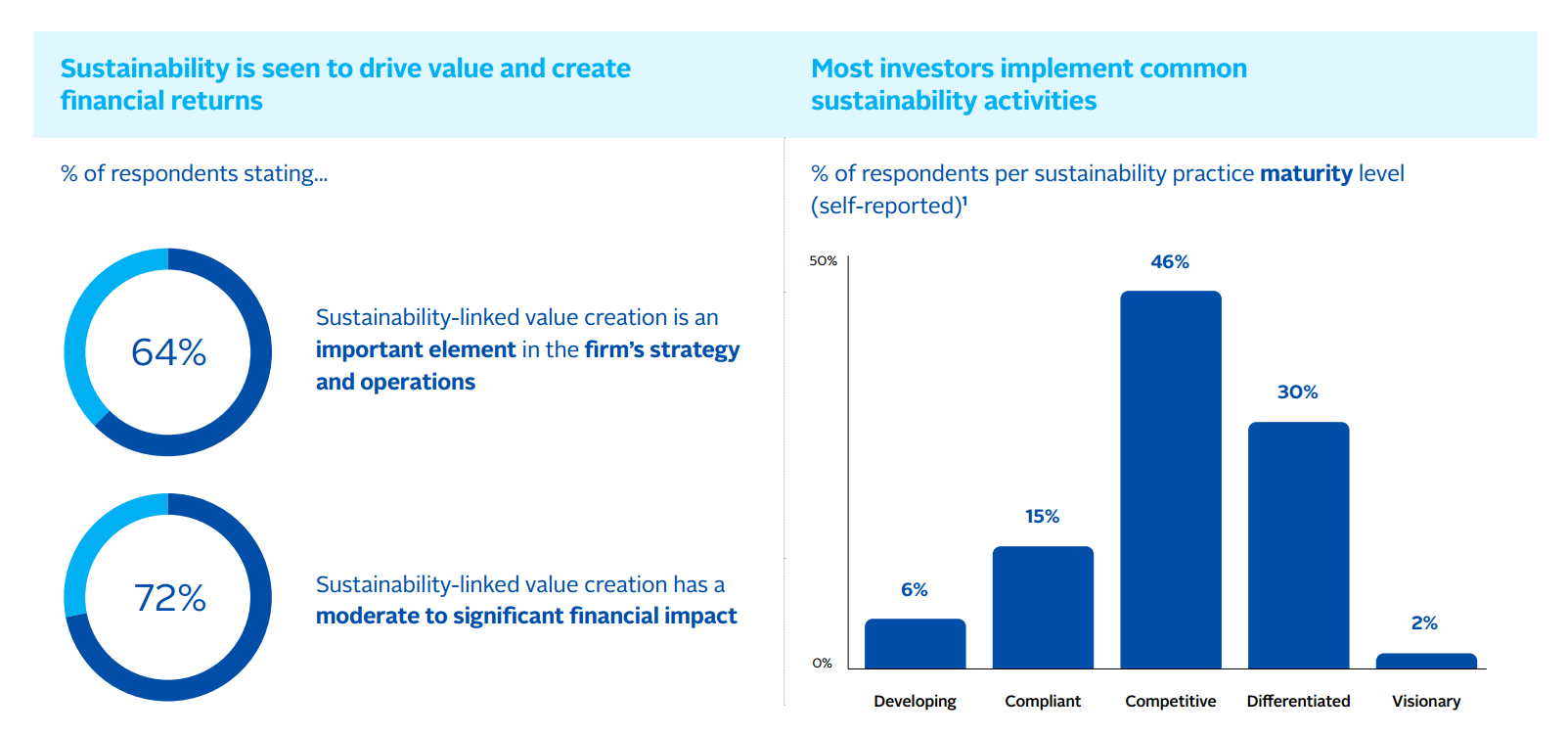
How Being Sustainable Pays Off
To understand why sustainability has become a strategic need in private capital, consider a portfolio company that rigorously implements resource efficiency measures, cultivates a diverse and highly skilled workforce, and demonstrates exceptional corporate governance. Such a company benefits from enhanced operational effectiveness and heightened appeal to a broader range of stakeholders. Reduced waste translates directly into lower operating expenses. A motivated, inclusive workforce typically shows superior productivity, lower employee turnover, and faster innovation.
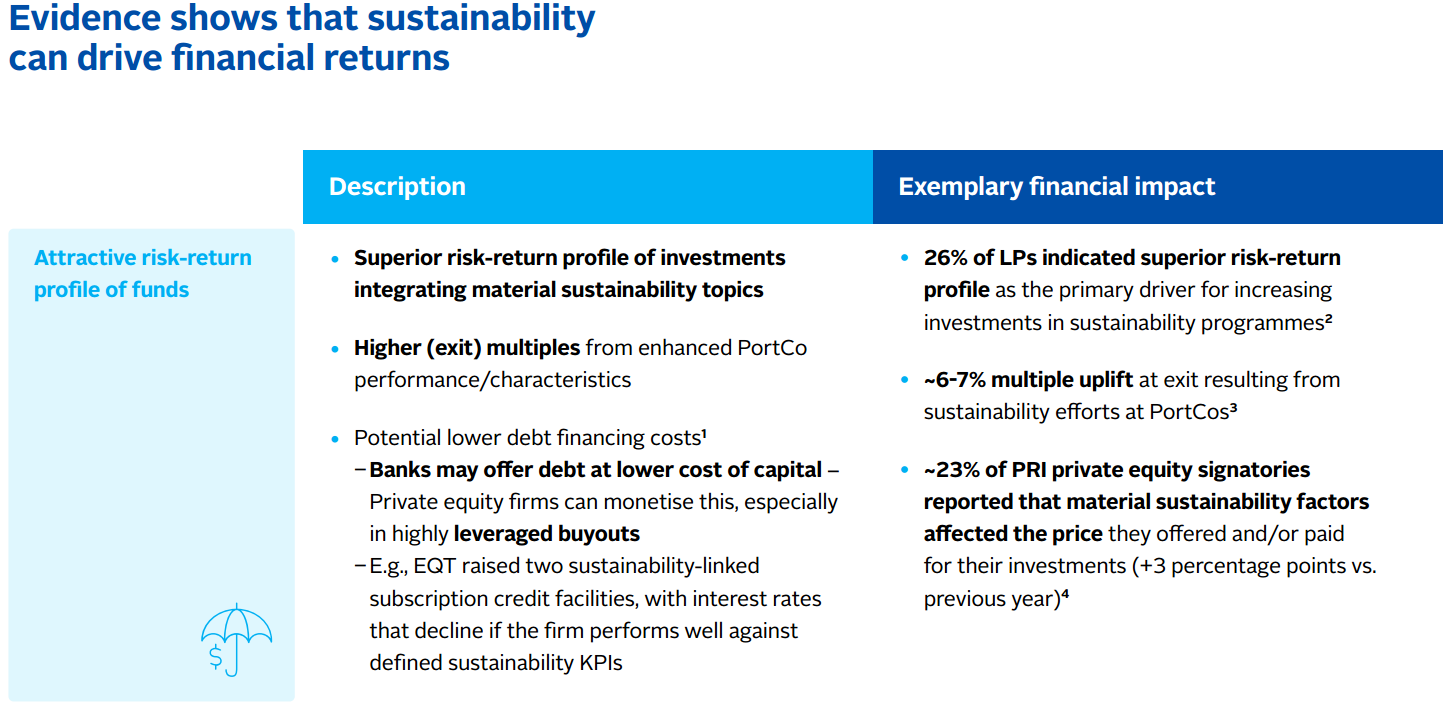
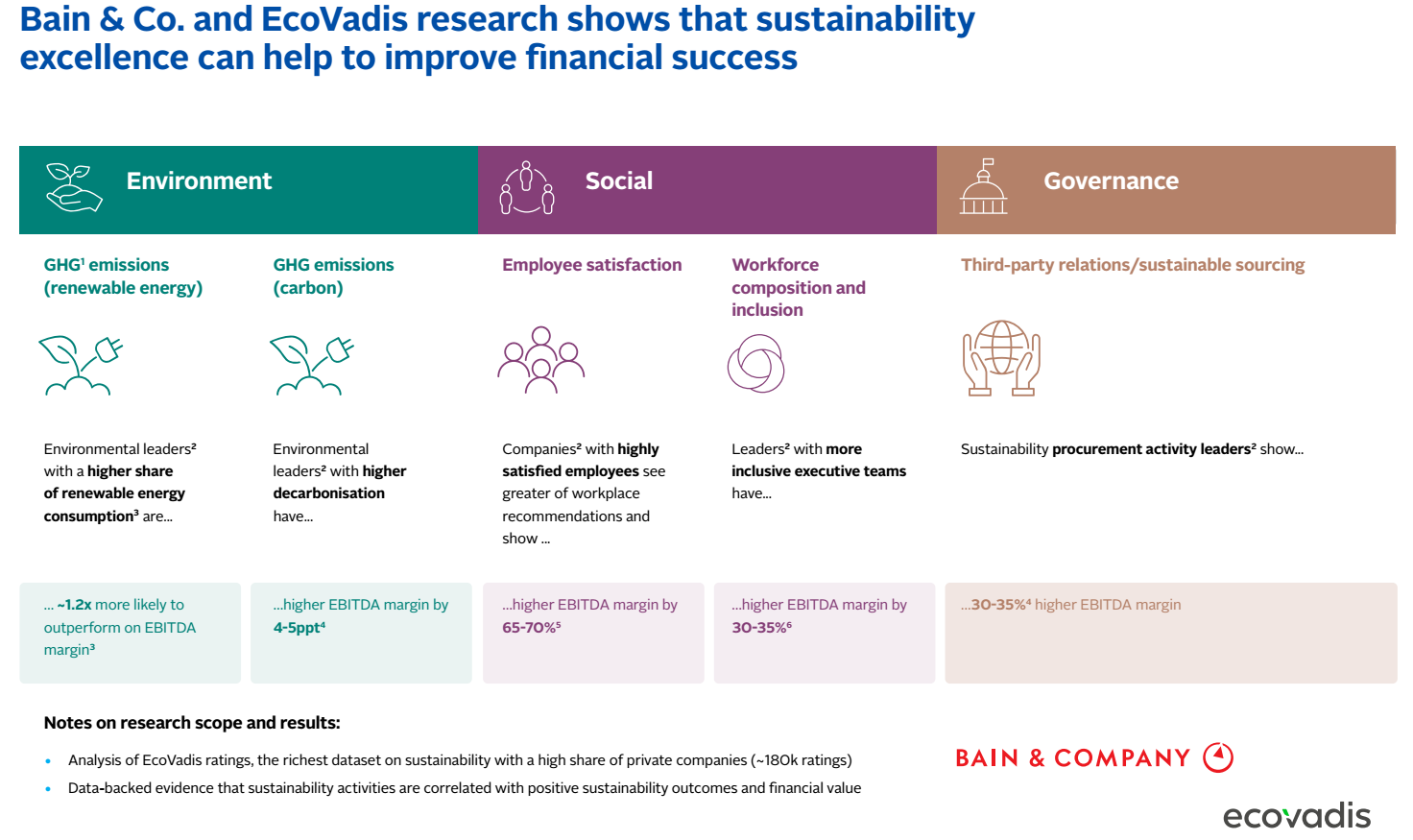
The SVC framework backs up these observations with interesting research findings:
Higher Sale Prices: Companies with strong sustainability focus can expect a 6-7% multiple uplift when sold from a private equity portfolio. This increase reflects the market's growing appreciation for businesses that are future-proofed, adaptable, and aligned with evolving societal expectations.
Accelerated Growth and Profitability: Companies integrating sustainability often experience approximately 67% faster revenue expansion and show superior profitability compared to their less sustainable counterparts. This advantage stems from enhanced brand perception, improved market access, and greater resource efficiency.
Enhanced Market Penetration and Pricing Power: Sustainable product offerings, particularly in sectors sensitive to consumer values, have achieved approximately 55% higher market share growth and can command a 28% price premium. This reflects growing consumer preference for ethically produced and environmentally conscious goods and services.
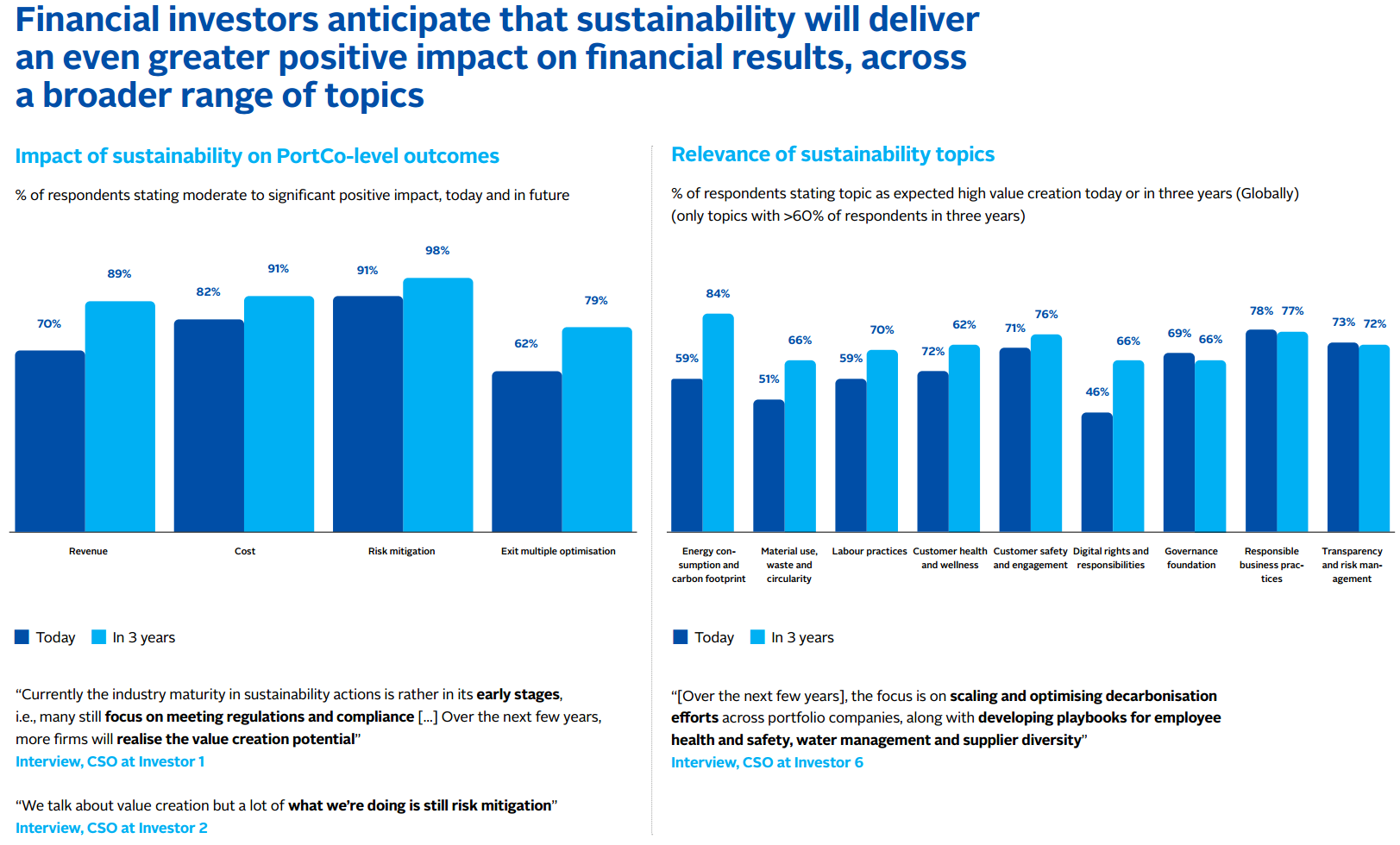
Risk Mitigation and Operational Stability: A proactive approach to sustainability, including robust environmental stewardship and adherence to social best practices, significantly reduces exposure to regulatory penalties, litigation risks, and reputational damage. An estimated 59% of private market investors identify this risk mitigation as having high impact on financial outcomes, contributing to greater long-term stability and predictability.
While these strategic benefits are compelling, investors have historically struggled to translate these principles into tangible financial outcomes. They often encounter challenges related to data quality, operational integration, and securing internal buy-in. The SVC framework systematically addresses these complexities, providing a structured approach to generate measurable financial value through sustainable practices.
The Three-Part Framework: How to Make It Work
The SVC framework presents a methodology for embedding sustainability across every stage of the private investment cycle, organised into three interdependent pillars:
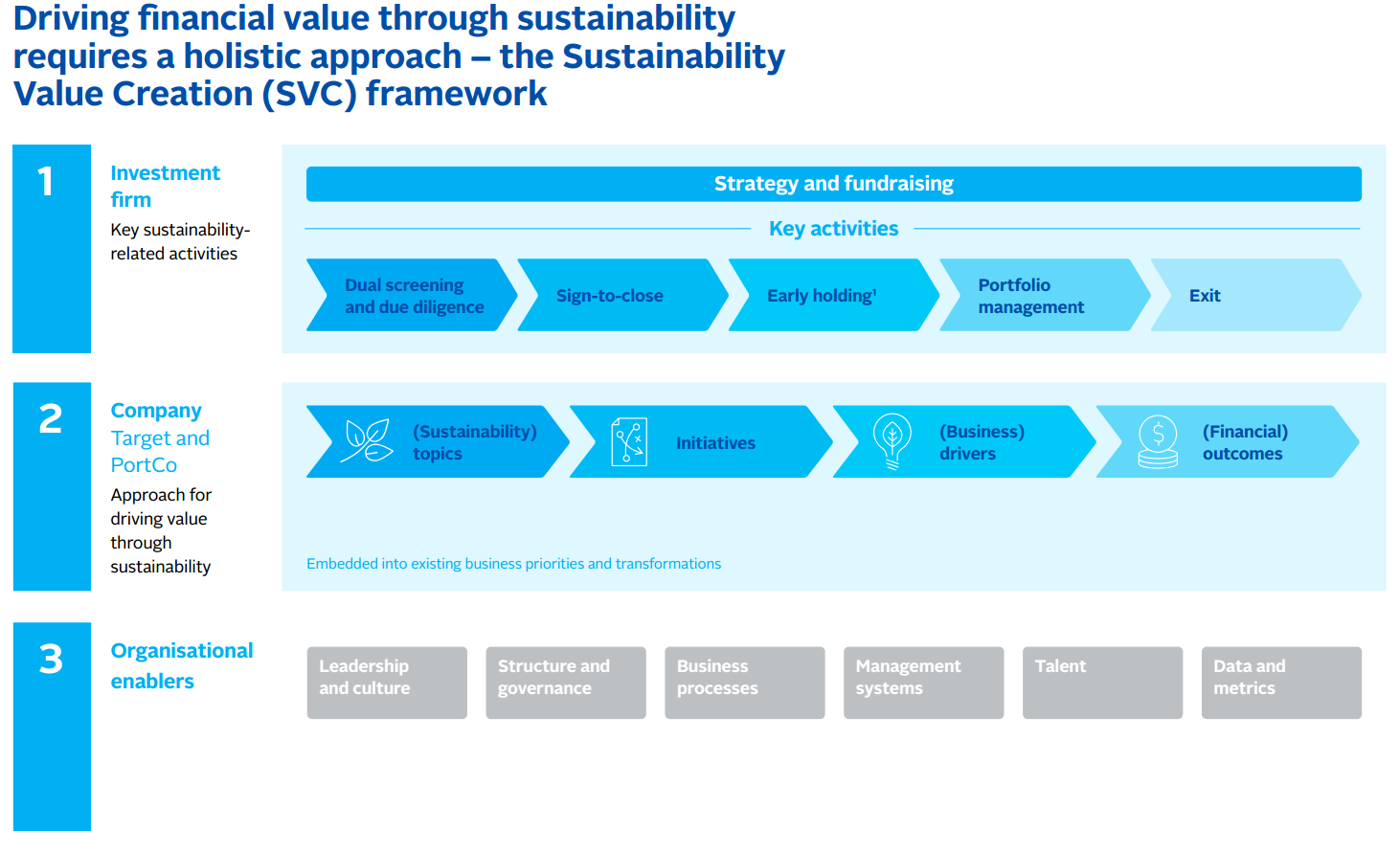
1. Making Sustainability Part of Everything (Firm-Level Integration)
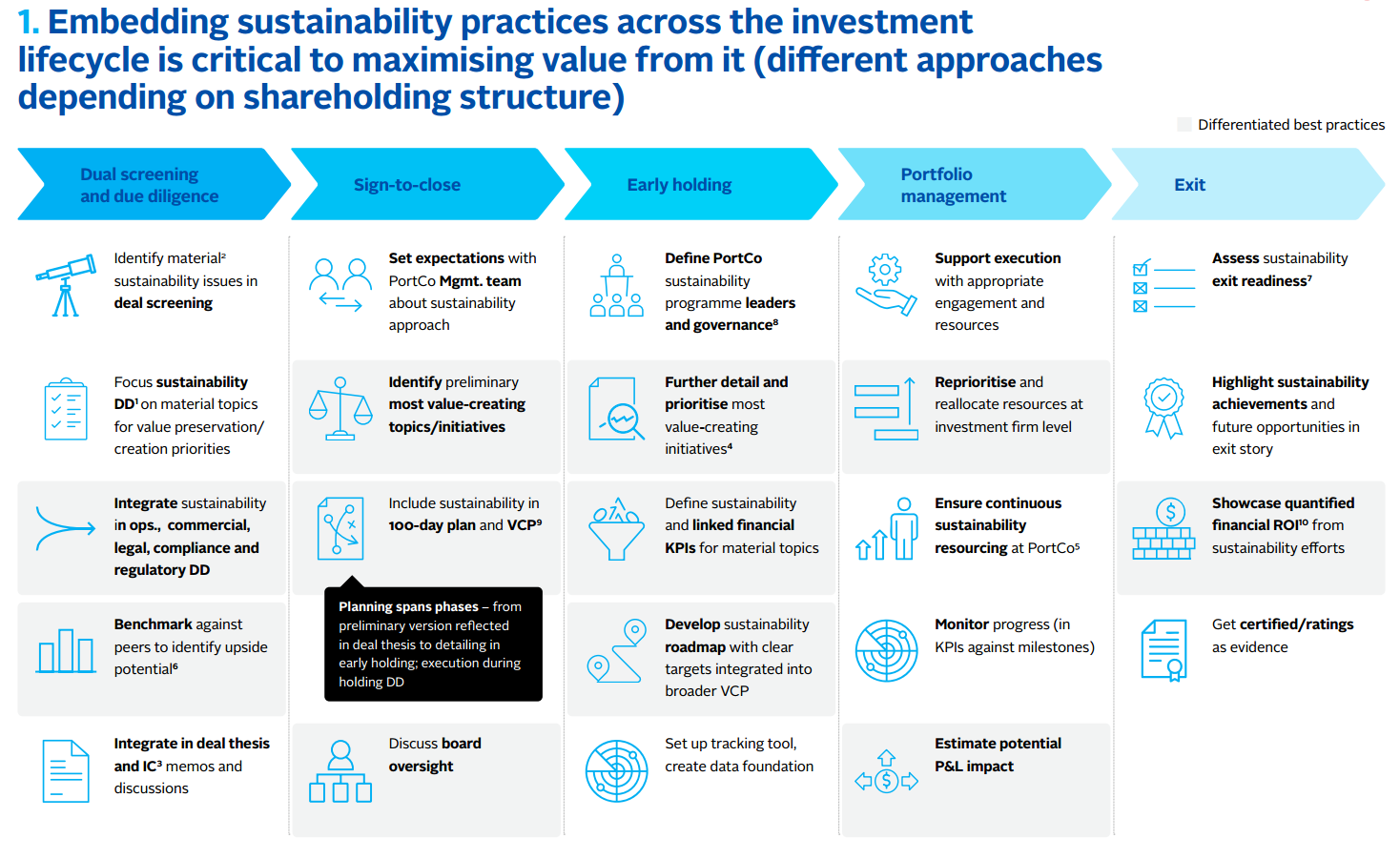
This pillar outlines how to weave sustainability considerations into the core fabric of an investment firm's operations, from initial deal sourcing to final exit.
Pre-Acquisition Due Diligence: The process begins with thorough assessment of sustainability risks and opportunities during target screening. This involves identifying material environmental, social, and governance factors relevant to both value preservation and creation.
Policy Implication: The development of harmonised, internationally recognised sustainability disclosure standards for private entities would greatly facilitate this crucial early assessment, enhancing market transparency and efficiency.
Post-Deal Planning: Following acquisition, investment firms establish clear expectations regarding sustainability approach with portfolio company leadership. This includes defining accountability and governance structures for sustainability initiatives.
Early-Stage Value Creation (First 100 Days): Sustainability objectives are immediately incorporated into the initial strategic blueprint for the portfolio company. This ensures sustainability becomes an inherent component of the value creation plan rather than a peripheral consideration.
Ongoing Portfolio Management: Throughout the ownership period, investment firms provide continuous support for executing sustainability programs. This involves allocating appropriate resources, monitoring progress against key performance indicators (KPIs) that link sustainability efforts directly to financial outcomes, and ensuring continuous oversight.
Strategic Exit: As investments mature, portfolio companies' sustainability achievements are meticulously documented and highlighted to prospective buyers. This demonstrates quantifiable financial returns and enhanced resilience attributable to these efforts, thereby optimising eventual sale valuations.
2. Creating Value at Each Company (Company-Specific Approach)
This dimension focuses on how sustainability directly drives financial value within portfolio companies themselves, leveraging specific operational levers.
Identification of Materiality: Each company presents distinct opportunities for sustainability-driven value creation. For instance, a logistics company might focus on fuel efficiency and fleet electrification, while a food producer might prioritise ethical sourcing and supply chain transparency.
Business Leadership Implication: Recognising that sustainability requires tailored strategies aligned with core business operations, rather than one-size-fits-all solutions, is paramount for successful implementation.
Tangible Financial Outcomes: Sustainability initiatives contribute to value through several channels:
Revenue Uplift: Driven by improved customer value proposition and enhanced market reputation
Cost Reduction: Achieved through greater operational efficiencies, resource conservation, and waste minimisation
Risk Mitigation: By proactively addressing potential environmental liabilities, social grievances, and regulatory non-compliance
Valuation Multiplier: Contributing to higher enterprise valuation upon divestment
3. Building the Right Foundation (Organisational Enablers)
Successful integration and execution of sustainability strategies requires strong internal infrastructure and culture that champions these principles across both investment firms and their portfolio companies.
Leadership and Culture: Authentic commitment from senior leadership is indispensable. Their active sponsorship signals that sustainability represents a strategic need, permeating organisational culture throughout all levels.
Structure and Governance: Clearly defined roles, responsibilities, and dedicated governance structures ensure accountability for sustainability performance. This includes establishing reporting lines and decision-making authority.
Business Process Integration: Sustainability considerations must be seamlessly woven into core business processes, from procurement and research and development to production and sales. This integration prevents sustainability from being treated as a separate, disconnected initiative.
Management Systems: Effective management relies on clear, value-oriented KPIs and sophisticated systems for tracking progress. This often requires digital tools and data infrastructure to support decision-making.
Finance Minister Implication: Investment in national digital infrastructure and data standardisation can indirectly support the private sector's ability to track and report on sustainability performance, nurturing green finance development.
Talent Development: Cultivating requisite sustainability expertise within organisations, through targeted recruitment or continuous professional development, is critical for effective implementation. This includes both technical knowledge and change management skills.
Data and Metrics: Reliable, consistent data forms the foundation of informed decision-making. Centralised sustainability data systems and identification of company-relevant metrics are essential for both internal management and external reporting requirements.
Common Challenges and Strategic Solutions
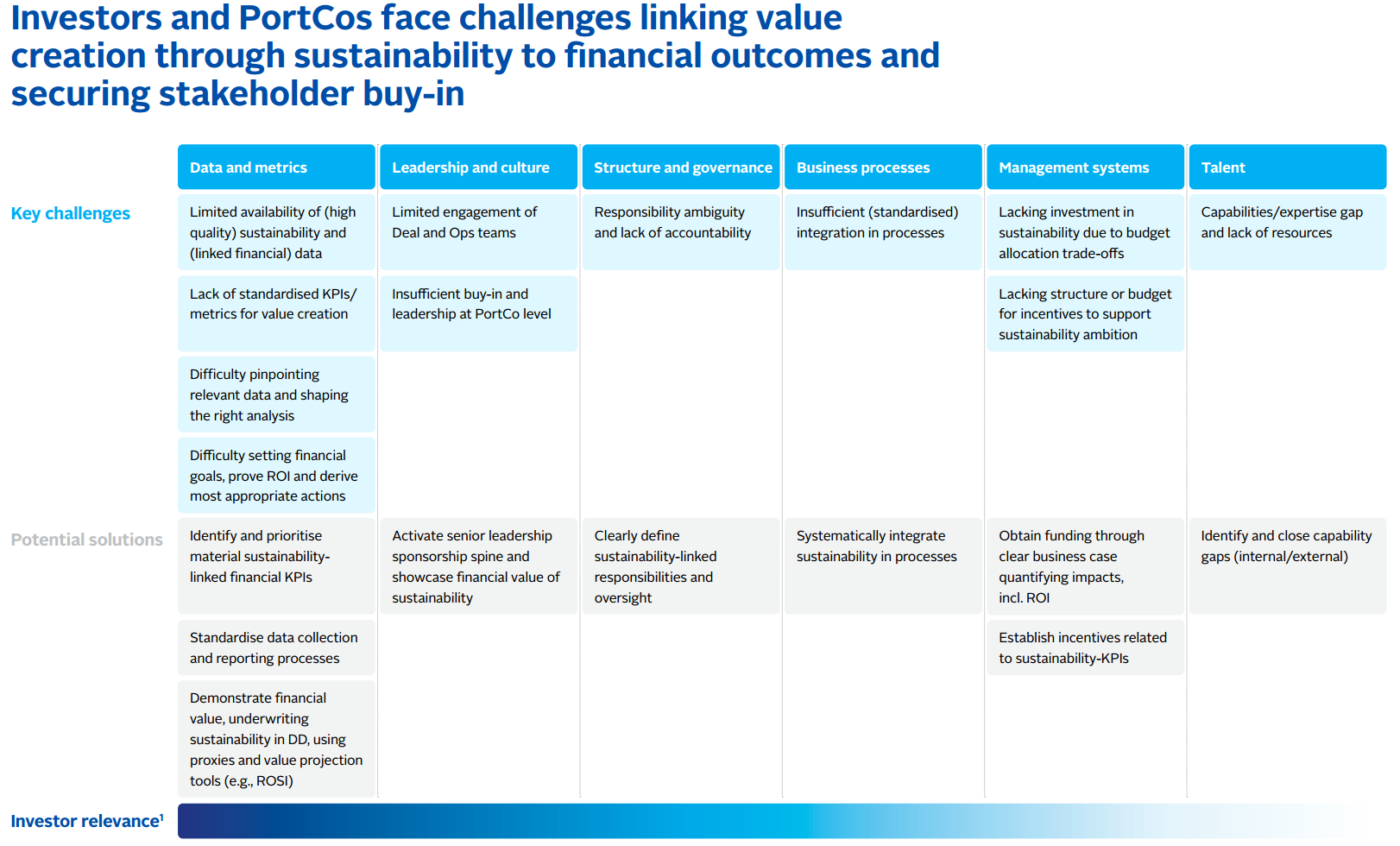
The journey toward comprehensive sustainable value creation faces intricate challenges. Issues such as fragmented data, complexities in quantifying direct financial causality, and securing universal organisational alignment are commonly encountered. The SVC framework offers strategic pathways to navigate these complexities:
Data Fragmentation: Prioritise financially material sustainability KPIs that directly influence company economic performance. Focus measurement efforts on metrics that clearly link to business outcomes rather than trying to track everything.
Securing Buy-in: Maintain unwavering executive sponsorship by continuously articulating the compelling financial rationale for sustainability initiatives. Use concrete examples and financial projections to demonstrate value creation potential.
Integration Challenges: Systematically embed sustainability into all operational processes, moving beyond specific and closed projects. This requires changing standard operating procedures and decision-making frameworks.
Capability Development: Proactively develop and enhance necessary capabilities and expertise within teams. This may involve training existing staff, hiring new talent, or partnering with external specialists.
Measurement and Reporting: Invest in sophisticated data collection and rigorous reporting mechanisms to ensure transparency and accountability. This includes both internal tracking systems and external communication platforms.
Future Directions and Broader Implications
This SVC framework represents a significant advancement in green finance and sustainable development discourse. It provides a pragmatic and academically sound blueprint for private market participants to fulfill their fiduciary responsibilities while emerging as leaders in shaping a more prosperous and sustainable global economy.
Future iterations of this work are expected to offer more detailed playbooks, advanced methodologies for financial impact quantification, and illuminating real-world case studies. These developments will further enrich the collective knowledge base for all stakeholders navigating this evolving landscape.
The framework also has broader implications for various stakeholders:
For Policymakers: The research suggests that harmonised sustainability disclosure standards and investment in digital infrastructure can significantly support private sector sustainability efforts and green finance development.
For Business Leaders: The evidence demonstrates that sustainability requires sector-specific approaches tailored to each company's unique operational context and value creation opportunities.
For Finance Ministers: National-level investments in data standardisation and digital infrastructure can create enabling environments for private sector sustainability tracking and reporting.
Ending Note
The strategic convergence of capital and sustainability demonstrates an economic reality supported by substantial evidence. Companies and investors who understand and act on this connection will gain significant competitive advantages in an increasingly sustainability-conscious market.
The SVC framework provides the roadmap for this transformation, showing how responsible investment practices can drive superior financial returns while contributing to positive environmental and social outcomes. As this approach becomes more widespread, it will likely reshape private markets and contribute to broader economic sustainability goals.
The evidence is clear, sustainable investing represents smart business strategy that creates lasting value for investors, companies, employees, customers, and society. The question for private market participants is no longer whether to integrate sustainability, but how quickly and effectively they can implement these proven approaches.