
Why Investors Consider Sustainability Factors in Capital Allocation?
The motivations, frameworks, and challenges guiding their decisions.

In recent years, the global financial landscape has witnessed a profound shift toward sustainable investment practices. Financial institutions increasingly recognise that traditional financial analysis alone provides an incomplete picture of investment opportunities and risks. Several factors are driving this transformation:
Risk Management and Return Enhancement
Sustainability factors directly impact financial performance through multiple channels. Environmental issues like resource scarcity can disrupt supply chains and increase operational costs. Social factors such as labor practices can lead to reputational damage or regulatory penalties. Governance weaknesses often correlate with financial misconduct or operational inefficiencies.
By incorporating these Environmental, Social, and Governance (ESG) considerations, investors can:
Identify previously overlooked risks that might not appear in conventional financial analysis
Better understand a company's long-term resilience and adaptability
Potentially enhance returns by selecting companies with superior sustainability practices
Positive Impact Creation
Many investors and financial institutions now seek to align their capital allocation with broader societal goals. This dual purpose approach aims to:
Minimize negative social and environmental externalities from investments
Maximize positive contributions to sustainable development
Support the transition to a low-carbon, resource-efficient economy
Market and Consumer Evolution
Consumer preferences have shifted dramatically, with growing demand for sustainable products and services. This trend creates both opportunities and risks:
Companies with strong sustainability credentials may capture growing market segments
Those failing to adapt face potential obsolescence as markets transform
Financial institutions responding to these trends can develop competitive advantages
Regulatory Landscape
The regulatory environment increasingly requires consideration of sustainability factors:
Disclosure requirements are expanding globally
Fiduciary duty interpretations now often include ESG considerations
Financial regulators increasingly view climate risk as systemic
What are some of the main Sustainable Investment Frameworks?
To navigate this complex landscape, several international frameworks have emerged to guide investors and financial institutions:
Principles for Responsible Investment (PRI)
Launched in 2006 with UN support, the PRI provides a voluntary framework for incorporating ESG issues into investment practices. Signatories commit to six principles, including incorporating ESG into analysis, being active owners, seeking disclosure, promoting acceptance, collaborating, and reporting on activities. With over 3,000 signatories representing more than $100 trillion in assets under management, the PRI has become the leading global framework for responsible investment.
Equator Principles
Focused specifically on project finance, the Equator Principles provide a risk management framework for determining, assessing, and managing environmental and social risks. Adopted by financial institutions worldwide, they establish minimum standards for due diligence to support responsible risk decision-making. The principles are particularly influential in infrastructure and industrial project development in emerging markets.
Principles for Sustainable Insurance (PSI)
Recognizing the insurance industry's unique role in risk management, the PSI guides insurers in addressing ESG risks and opportunities. The framework encompasses underwriting, risk management, product development, claims management, sales, and investments. PSI signatories work to embed ESG considerations throughout their business operations while engaging clients, regulators, and other stakeholders.
Principles for Responsible Banking (PRB)
Launched in 2019, the PRB provides a framework for a sustainable banking system. Signatories commit to aligning business strategies with society's goals as expressed in the Sustainable Development Goals and the Paris Climate Agreement. The principles emphasize impact analysis, target setting, client engagement, stakeholder partnerships, and transparency.
How are the risks posed by climate change categorised?
Climate change presents unique challenges for investors, with impacts manifesting through various channels:
Physical Risks
These arise from the direct effects of climate change on assets, operations, and markets:
Acute risks include increasing frequency and severity of extreme weather events such as hurricanes, floods, and wildfires that can damage infrastructure, disrupt operations, and impact insurance costs.
Chronic risks involve long-term shifts in climate patterns, such as rising sea levels, changing precipitation patterns, and increasing average temperatures that gradually affect agricultural productivity, worker health, and operational viability.
Transition Risks
These emerge from the societal shift toward a lower-carbon economy:
Policy and legal risks arise from carbon taxes, emissions trading schemes, enhanced disclosure requirements, and climate-related litigation.
Technology risks stem from innovations that disrupt existing business models, such as renewable energy technologies displacing fossil fuels.
Market risks reflect changing consumer preferences, supply chain pressures, and increasing costs of raw materials.
Reputational risks affect companies perceived as contributing to climate change or failing to address it adequately.
What are the main reasons to take account of ESG factors in financial analysis and decision-making?
The incorporation of ESG factors into financial analysis yields multiple advantages:
Enhanced Financial Performance
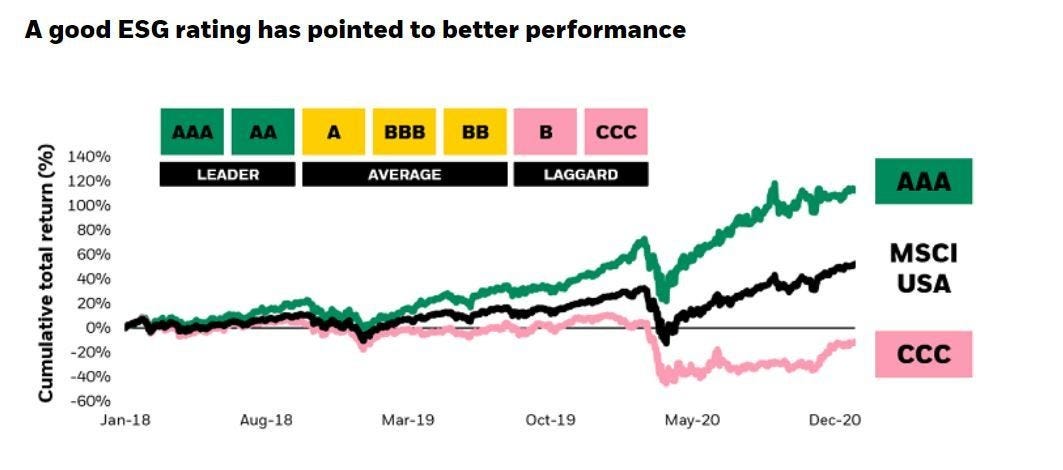
Empirical evidence increasingly supports the positive relationship between strong ESG performance and financial outcomes:
Companies with robust sustainability practices often demonstrate lower cost of capital
ESG leaders frequently show greater operational efficiency and resource management
Strong governance correlates with reduced incidence of fraud, corruption, and accounting irregularities
Improved Risk Assessment
ESG analysis provides a more comprehensive view of potential risks:
Environmental analysis identifies exposure to resource constraints and regulatory changes
Social assessment reveals potential labor issues, community conflicts, or customer concerns
Governance evaluation highlights management quality and alignment with shareholder interests
Meeting Client Expectations
Client demand for sustainable investment options continues to grow:
Retail investors increasingly seek alignment between investments and personal values
Institutional investors face pressure from beneficiaries and stakeholders to consider sustainability
Corporate clients look for financial partners that understand and support their sustainability goals
Capital Reallocation Effects
ESG integration influences the flow of capital in ways that support sustainability transitions:
Companies with strong sustainability performance gain improved access to capital
Projects addressing climate change and other environmental challenges attract increased funding
The cost of capital tends to rise for activities with negative sustainability impacts
What are some of the challenges faced by ESG investments?
Despite rapid growth, sustainable investment faces several significant challenges:
Definitional Ambiguity and Greenwashing
The lack of standardized definitions creates confusion and enables misleading claims:
Terms like "sustainable," "green," and "responsible" lack consistent meanings
Some investment products claim ESG credentials without substantive integration
Marketing sometimes emphasizes positive aspects while obscuring negative impacts
Data Limitations
ESG data faces several quality and consistency issues:
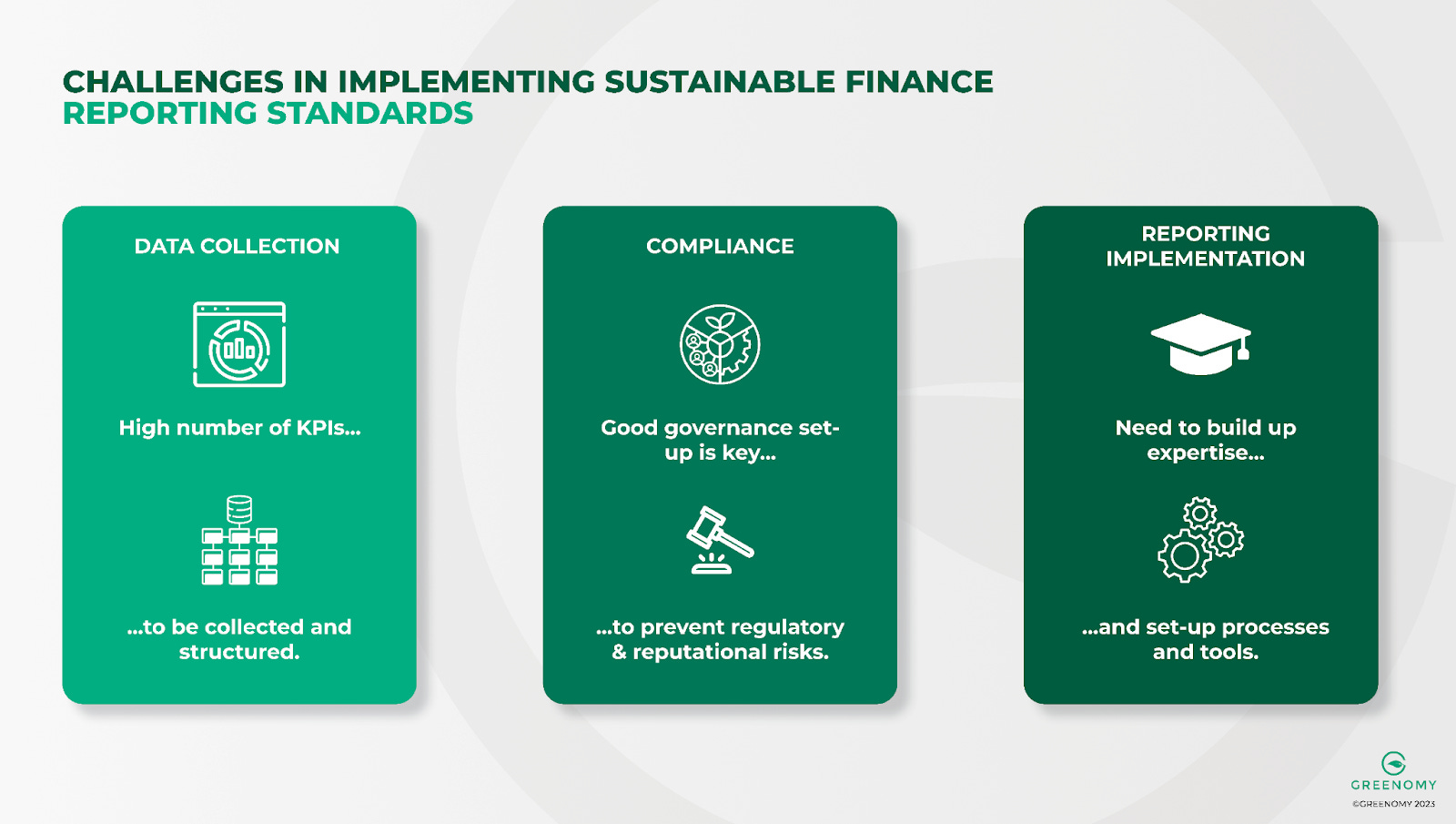
Corporate disclosures vary widely in scope, detail, and methodology
Data coverage remains uneven across regions, company sizes, and industries
Forward-looking metrics and scenario analyses are particularly difficult to standardize
Market Development Variances
The maturity of sustainable investment markets varies significantly:
Some regions have advanced regulatory frameworks and market infrastructure
Others lack basic disclosure requirements or investor awareness
This creates challenges for global investors seeking consistent approaches
Measuring Impact
Quantifying the real-world effects of sustainable investment remains challenging:
Attribution of specific environmental or social outcomes to particular investments is difficult
Time lags between investment and impact complicate assessment
Methodologies for measuring impact are still evolving
Despite these challenges, the momentum behind sustainable investment continues to build. As data quality improves, reporting standards converge, and regulatory frameworks mature, the integration of sustainability factors into capital allocation will likely become standard practice.
The financial sector's embrace of sustainability represents not just a risk management strategy but an opportunity to align capital flows with broader societal goals. By addressing the current limitations and continuing to refine approaches, sustainable finance has the potential to contribute significantly to global sustainability transitions while delivering competitive financial returns.